
 rohilkhandcancerinstitutebly@gmail.com



Bowel Cancer


Bowel Cancer
Bowel Cancer – Rohilkhand Cancer Institute | Pet CT Scan in Bareilly
Symptoms of Bowel Cancer: Early Detection Can Save Lives
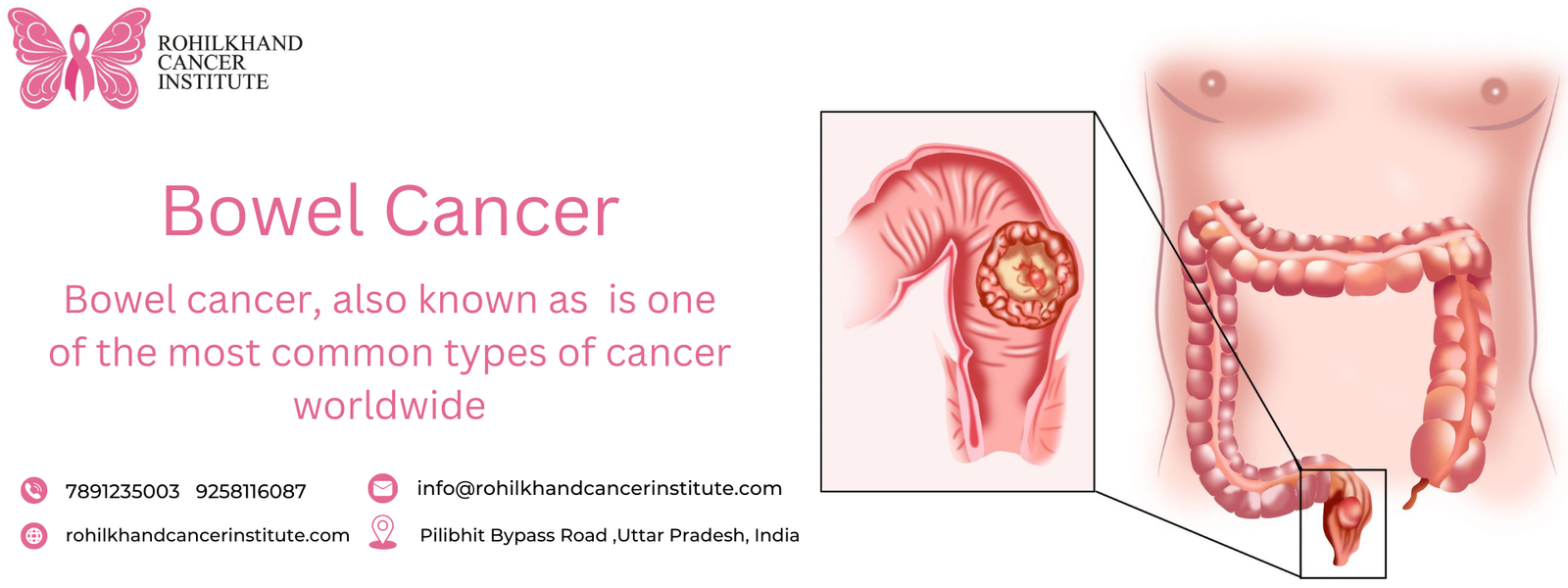
Bowel cancer, also known as colorectal cancer, is one of the most common types of cancer worldwide. It typically affects the colon or rectum and can often be treated successfully when detected early. Understanding the symptoms is crucial for timely diagnosis and intervention. At Rohilkhand Cancer Institute, we emphasize awareness as the first step towards prevention and care.
Here are the key symptoms of bowel cancer to watch out for:
1. Changes in Bowel Habits
Persistent changes in your normal bowel habits, such as:
- Diarrhea or constipation lasting for more than a few weeks.
- Narrow or ribbon-like stools.
- A sensation of incomplete evacuation, even after using the restroom.
2. Blood in Stool
Blood in the stool is one of the most noticeable signs. It can appear as:
- Bright red blood.
- Dark, tarry stools, indicating older blood.
- Occasional bleeding that may be mistaken for hemorrhoids.
3. Abdominal Pain or Discomfort
- Persistent abdominal cramping, bloating, or pain.
- A feeling of fullness even after a small meal.
4. Unexplained Weight Loss
Sudden, unintentional weight loss may be a sign that the body is battling an underlying condition like bowel cancer.
5. Fatigue and Weakness
- Chronic tiredness that doesn’t improve with rest.
- This could be due to anemia caused by long-term blood loss.
6. Persistent Nausea or Vomiting
These symptoms, when combined with other warning signs, may point to a blockage in the bowel or another abnormality.
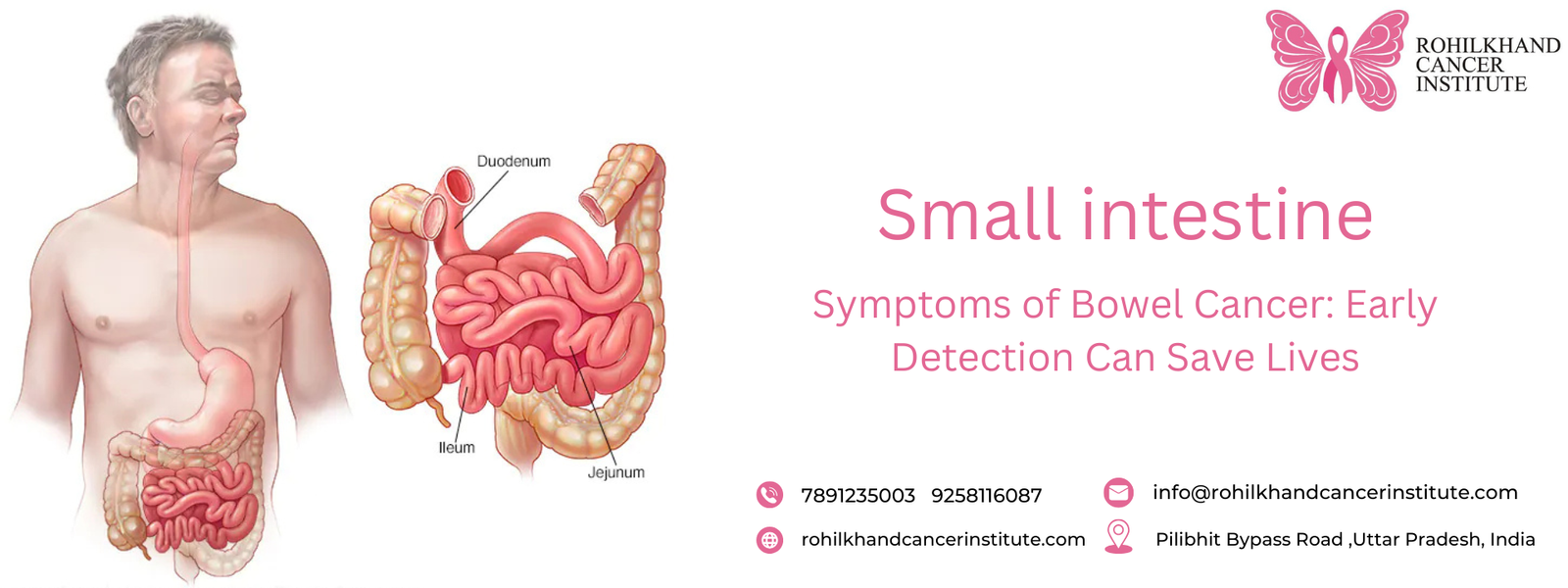
One kind of cancer that begins as a proliferation of cells in the small intestine is small bowel cancer. The lengthy tube that transports digested food from the stomach to the large intestine is known as the small intestine or small bowel.
Nutrients from food are broken down and absorbed in the small intestine. Hormones it generates aid with digestion. The body’s immune system, which fights germs, is also influenced by the small intestine. Cells in it combat viruses and germs that enter the body through the mouth.
Surgery to remove the malignancy is typically used to treat small bowel cancer. Chemotherapy and targeted therapy are other treatments that utilise medications to destroy cancer cells. Before surgery, radiation therapy may also be performed to reduce the size of the cancer.
Symptoms
Symptoms of small bowel cancer include:
(1)Nausea.
(2)Vomiting.
(3)Skin flushing.
(4)Abdominal pain.
(5)Watery diarrhea.
(6) Feeling very weak or tired.
(7) Losing weight without trying.
(8) Blood in the stool, which might look red or black.
(9) Yellowing of the skin and the whites of the eyes, called jaundice.
Causes
It is unknown what causes small bowel cancer. What is known is that the small intestinal cells undergo a transformation that turns them into cancerous cells.
When cells undergo DNA alterations, small bowel cancer results. The instructions that inform a cell what to do are encoded in its DNA. The modifications instruct the cells to proliferate rapidly. When healthy cells would naturally perish as part of their life cycle, the cells continue to live. Too many cells are produced as a result. The cells may accumulate into a lump known as a tumour. Healthy body tissue may be invaded and destroyed by the cells. The cells may eventually separate and disperse to other bodily regions.
Types of small bowel cancer
The type of cell where your cancer started determines the sort of small bowel cancer you have. Types of small bowel cancer include, for example:
- Adenocarcinoma. Adenocarcinoma is the most common type of small bowel cancer. Adenocarcinoma starts in the gland cells that make mucus.
- Neuroendocrine tumors. Neuroendocrine tumors are cancers that start in the neuroendocrine cells. Neuroendocrine cells are found in many places in the body. They do some nerve cell functions and some of the work of cells that make hormones.
- Lymphoma. Lymphoma is a cancer that starts in immune system cells. The body’s immune system fights germs. Immune system cells in the small intestine fight bacteria and viruses that enter the body through the mouth. Most lymphomas in the small bowel are a type of non-Hodgkin’s lymphoma.
- Soft tissue sarcoma. Soft tissue sarcomas are cancers that start in the body’s connective tissues. One type of soft tissue sarcoma is a gastrointestinal stromal tumour, also known as GIST. starts in special nerve cells that are found in the wall of the small bowel.
When developing a treatment strategy, your medical team takes into account the type of small bowel cancer you have.
Risk factors
The following variables may raise your risk of small bowel cancer:
(1) genetic alterations that are inherited. Your chance of developing small bowel cancer and other malignancies may be raised by certain genetic alterations inherited from your parents. Lynch syndrome, Peutz-Jeghers syndrome, and familial adenomatous polyposis, or FAP, are a few examples.
(2) other bowel disorders. Small bowel cancer risk may be elevated by other intestinal disorders and conditions. Coeliac disease, inflammatory bowel disease, and Crohn’s disease are a few examples.
(3) compromised immune system. You may be at higher risk for small bowel cancer if your immune system, which fights germs, is compromised. HIV-positive individuals and those who use medication to regulate their immune systems following an organ transplant are two examples.
(3) your diet and beverages. Certain foods and beverages have been linked in some studies to an increased risk of small bowel cancer. For instance, consuming alcohol and eating a diet high in sugar, red meat, and items that have been smoked or salt-cured appear to be linked to the risk.
Complications
Complications from small bowel cancer may include:
- an elevated risk for other malignancies. Individuals with small bowel cancer are more likely to develop other cancers. These could include conditions that impact the ovaries, colon, rectum, and endometrium, the lining of the uterus.
- cancer that spreads to several body parts. It is possible for advanced small bowel cancer to spread to other body sites. Metastatic cancer is the term used to describe cancer that spreads. The liver is where small bowel cancer most frequently spreads.
Prevention
What might lower the risk of small bowel cancer is unclear. In order to lower your overall chance of developing cancer, it could be beneficial to:
- Consume a range of whole grains, fruits, and vegetables. Vitamins, minerals, fibre, and antioxidants found in fruits, vegetables, and whole grains may help lower your chance of developing cancer and other illnesses. To acquire a range of vitamins and nutrients, pick a selection of fruits and vegetables.
- If you drink alcohol at all, do it in moderation. If you decide to consume alcohol, do so sparingly. For healthy people, that entails no more than one drink per day for women and two for men.
- Give up smoking. See a medical expert about quitting methods that might be effective for you.
- On most days of the week, get some exercise. On most days, try to get in at least 30 minutes of exercise. If you haven’t been active, start out slowly and increase to 30 minutes over time. Additionally, before beginning any fitness program, consult your healthcare team.
- Keep your weight in check. If you are at a healthy weight, try to keep it that way by eating well and exercising every day. Ask your healthcare team about healthy approaches to reach your weight loss goals if you need to lose weight. Increase your physical activity and cut back on your caloric intake to gradually lose weight.
While bowel cancer can affect anyone, certain factors increase the risk:
- Family history of colorectal cancer.
- Diets high in red or processed meats and low in fiber.
- Sedentary lifestyle.
- Smoking and excessive alcohol consumption.
- Age (most common in people over 50).
When to See a Doctor
If you experience any of these symptoms, especially for more than a few weeks, consult a healthcare provider immediately. Early screening and diagnosis are critical. At Rohilkhand Cancer Institute, we offer comprehensive diagnostic and treatment services, including:
- Colonoscopies.
- Imaging tests.
- Personalized treatment plans.
Take Action for Your Health
Bowel cancer can be a silent disease in its early stages, but recognizing its symptoms and seeking prompt medical attention can make all the difference. Stay vigilant, prioritize regular screenings, and maintain a healthy lifestyle to reduce your risk.
For more information or to schedule a consultation, contact Rohilkhand Cancer Institute today. Together, we can fight bowel cancer with knowledge, care, and action.
Related Posts
Rohilkhand Cancer Institute: Advanced Early Cancer Detection and Screening Services
-
Posted by
 admin
admin

कीमोथेरेपी क्या है? प्रक्रिया, फायदे और सावधानियाँ
-
Posted by
admin
Advanced Cancer Treatment at Rohilkhand Cancer Institute – Top Oncology Hospital in Bareilly
-
Posted by
admin

Immune-Based Cancer Treatments in Bareilly at Rohilkhand Cancer Institute
-
Posted by
admin

Why Rohilkhand Cancer Institute is the Best Choice for Childhood Cancer Treatment in Bareilly
-
Posted by
admin
Why Rohilkhand Cancer Institute is the Best Choice for Interventional Radiology in Bareilly
-
Posted by
admin

Brain Tumor Surgery in Bareilly at Rohilkhand Cancer Institute – Advanced & Expert Care
-
Posted by
admin

आयुष्मान भारत योजना के तहत Rohilkhand Cancer Institute में सस्ता कैंसर इलाज
-
Posted by
admin
Advanced PET Scan Services at Rohilkhand Cancer Institute, Bareilly
-
Posted by
admin
Best Hospital for Stomach Cancer Treatment in Bareilly – Rohilkhand Cancer Institute, Bareilly
-
Posted by
admin
Top Pediatric Oncology Experts in Bareilly: Care & Compassion at Rohilkhand Cancer Institute
-
Posted by
admin
Expert Bone Cancer Specialists in Bareilly: Treatment at Rohilkhand Cancer Institute
-
Posted by
admin