
 rohilkhandcancerinstitutebly@gmail.com


World No Tobacco Day: Expert Insights from Cancer Specialist Prof. (Dr.) Arjun Agarwal

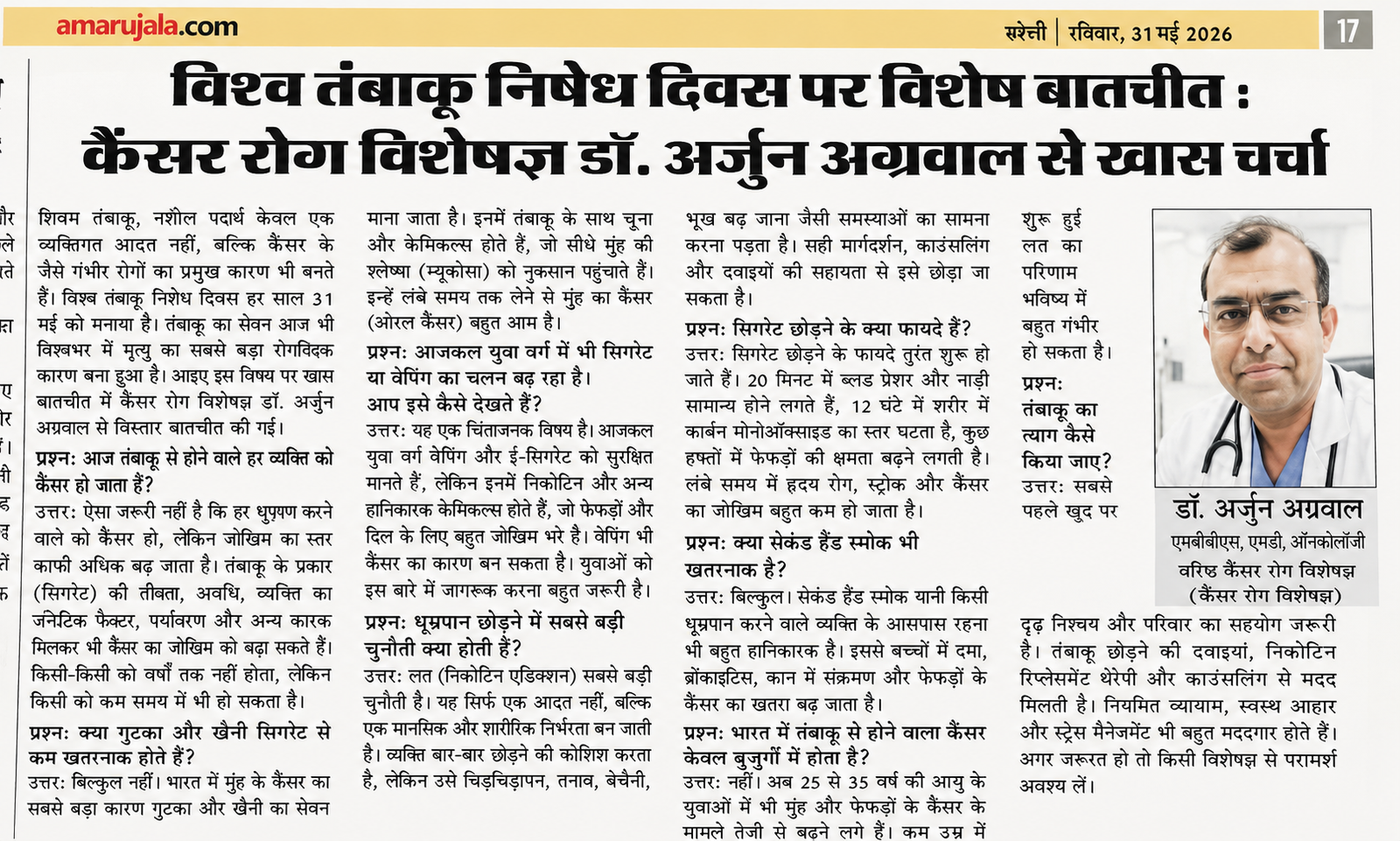
Tobacco: A Silent Threat Behind Many Cancers
Every year, World No Tobacco Day is observed on 31st May to raise awareness about the harmful effects of tobacco consumption and encourage people to quit this deadly habit. Tobacco is not merely a personal choice—it is one of the leading causes of preventable deaths worldwide and a major contributor to various types of cancer.
On this occasion, Prof. (Dr.) Arjun Agarwal, Director, Rohilkhand Cancer Institute and Senior Surgical Oncologist, shared valuable insights on the relationship between tobacco use and cancer, common misconceptions, warning signs, and effective ways to quit.
Does Every Tobacco User Develop Cancer?
Not every tobacco user develops cancer, but tobacco significantly increases the risk. Factors such as the type and duration of tobacco use, genetic predisposition, environmental influences, and overall health contribute to the likelihood of developing cancer. However, the risk remains substantially higher among tobacco users compared to non-users.
Are Gutka and Khaini Safer Than Cigarettes?
A common misconception is that smokeless tobacco products such as gutka and khaini are less harmful than cigarettes. In reality, these products are among the leading causes of oral cancer in India. They contain tobacco, lime, and harmful chemicals that continuously damage the tissues inside the mouth, often leading to precancerous conditions and oral malignancies.
The Rising Trend of Vaping Among Youth
The increasing popularity of vaping and e-cigarettes among young people is a growing concern. Many believe vaping is a safe alternative to smoking, but it contains nicotine and other harmful substances that can damage the lungs and cardiovascular system. Emerging evidence also suggests that vaping may increase cancer risk and lead to nicotine addiction.
What Makes Quitting Tobacco So Difficult?
Nicotine addiction is one of the strongest forms of dependence. Tobacco use affects both the mind and body, making it difficult for users to quit despite repeated attempts. Withdrawal symptoms such as irritability, anxiety, restlessness, and strong cravings often discourage people from continuing their quit journey.
However, with proper counseling, medical guidance, nicotine replacement therapies, and support from family members, quitting tobacco is entirely possible.
Early Warning Signs of Cancer
Early detection plays a crucial role in successful cancer treatment. Some warning signs that should never be ignored include:
- Mouth ulcers that do not heal for more than three weeks
- Persistent hoarseness or voice changes
- Difficulty swallowing
- Chronic cough
- Unexplained weight loss
- Swelling or lumps in the mouth, neck, or other parts of the body
If any of these symptoms persist, prompt medical evaluation is essential.
Benefits of Quitting Tobacco
The body begins to recover almost immediately after quitting tobacco.
- Within 20 minutes, blood pressure and pulse rate begin to normalize.
- Within 12 hours, carbon monoxide levels in the blood decrease.
- Over the following weeks and months, lung function improves.
- Long-term risks of heart disease, stroke, and cancer gradually decline.
No matter how long someone has used tobacco, quitting today can significantly improve future health outcomes.
Is Secondhand Smoke Dangerous?
Yes. Secondhand smoke affects not only smokers but also their families, colleagues, and friends. Children exposed to tobacco smoke are at increased risk of asthma, respiratory infections, and other health complications. Long-term exposure can also increase the risk of cancer among non-smokers.
Cancer Is No Longer Limited to Older Adults
While cancer has traditionally been associated with older age groups, an increasing number of cases are being diagnosed among younger adults. Lifestyle factors, tobacco use, environmental exposures, and delayed diagnosis contribute to this concerning trend.
The First Step Toward a Tobacco-Free Life
The journey toward quitting tobacco begins with a firm decision. Setting a quit date, informing family and friends, avoiding triggers, seeking professional support, and adopting a healthy lifestyle can greatly improve the chances of success.
A Message from Prof. (Dr.) Arjun Agarwal
“Tobacco-related cancers are largely preventable. Awareness, early detection, and timely intervention can save countless lives. Quitting tobacco today is the most important investment you can make for your future health.”
On this World No Tobacco Day, let us commit ourselves and our communities to a tobacco-free future and work together toward a healthier, cancer-free society.